THIS WEEK IN CULTURE + THE CULTURE BUSINESS

Ruairi Conaghan: Lies Where It Falls
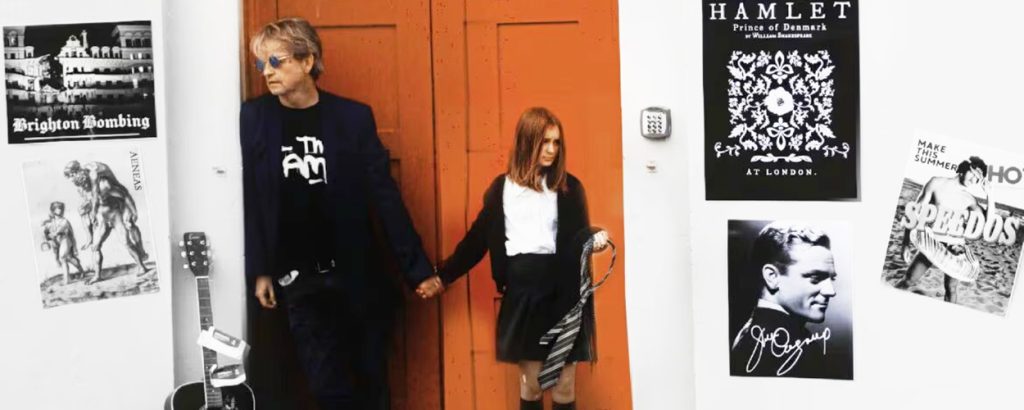
I love it when the really great stuff we saw up at the Edinburgh Fringe makes its way to London and I am especially excited about this one, because it truly won the heart of our reviewer and generated a heartfelt 5/5 review.
Actor Ruairi Conaghan – a familiar face from both stage and screen – is the creator and performer of the show, which focuses on his own experiences and the impact of trauma, and is both moving and humorous.
I spoke to Ruairi to find out more, about the show, its creation and its creator.
CM: Can you start by telling us a bit about the content of the show? Do you tell a story? What is it about?
RC: ‘Lies Where It Falls’ is an autobiographical story set in 2015.
In that year I was cast as Patrick Magee, most famous for being the IRA man who tried to assassinate Margaret Thatcher in Brighton in 1984. The play I was cast in was examining the truth and reconciliation relationship that Magee had forged with Jo Berry, the daughter of Sir Anthony Berry, who was killed by the bomb.
The secret that I had was that my uncle, Judge Rory Conaghan, was shot dead by the IRA in 1974. I was playing a man who represented the organisation that had shattered my family.
My next job was as The Player King in ‘Hamlet’, and the speech on the assassination of King Priam of Troy by Pyrrhus placed me in the moment of my uncle’s murder and released a trauma that had been within me for 40 years.
This led to a physical and mental breakdown that threatened my mortality, but through love and medical care I found a way to recovery.
CM: What themes do you explore through the play?
RC: The most dominant theme is probably hidden trauma, particularly as a child, but also there is a lot of love and hope in the story.
There is the power of theatre as a means for healing. Friendship, family, grief. It delves into big issues like those but is unafraid to bring humour and levity to the story.
CM: Why did you decide to explore these themes through this kind of performance? What inspired you to create this work?
RC: I felt that I had a story to tell and that there was a uniqueness to my tale – the experience of the actor, in their attempt to find authenticity, damaging their health.
What inspired me was an understanding that a hidden story needed to be told about my own personal loss through violence and how that can impact 40 years later.
CM: Can you tell us about the creative process you went through in creating this?
RC: I had debated with myself whether I was going to write a book or maybe an article for the press, or some kind of journal of my experience, but I settled on doing a play. It’s what I know. It’s what I do best.
The writing poured out of me and I had something to work with pretty quickly. The next task was to see if it could work in presentation.
We workshopped it. Then COVID hit, which worked to our advantage, as I suddenly had really focused time. So the development process was really good. I had strong support from people like Raz Shaw and Patrick O’Kane, really brilliant theatre practitioners who guided me.
CM: Was/is it cathartic to work on this?
RC: The writing of it was certainly cathartic. I found an honesty and articulation on the page that was quiet in my voice.
The playing of it not so much, as I’ve learnt that the story I tell relates more to my audience’s experience rather than my own. That was something I didn’t foresee, but is a really brilliant affirmation of my play.
CM: Would you say the play has a particular message? Would you regard it as political?
RC: The message is what people take from it. I presented a piece of theatre about authenticity and truth and knew as long as I stuck to that then I will have done my job.
Not only is the play political, pretty much everything in my career has been political. My accent and place of birth ordained that. But for me all political theatre must entertain. If you don’t achieve that no one’s going to listen.
CM: Our reviewer loved the show when he saw it in Edinburgh. How did that run go from your perspective? Would you go back to the Fringe?
RC: What I loved about your review of my play is that you feared that this story could be an indulgent one. But you came away from it profoundly moved and encouraged all to see it.
My Edinburgh run was a tale of two halves. The first two weeks, small audiences, difficulty in building an audience, technical issues with the venue, but once the reviews came out I found my audience and more influential practitioners came. Hence my transfer to The Finborough in London.
I would go again with this play. Having established itself in Edinburgh and gained its reputation, it would be an easier sell. Finding an audience with a new play is hard.
CM: Can you tell us a bit about yourself now? How did you come to be pursuing a career in the arts? Was it what you always wanted to do?
RC: My mother was a very keen amateur actress, so I grew up around plays and the atmosphere of theatre. I just loved it and it was one of the few things I was adept at. It seemed natural to pursue it. In truth I have known nothing else career wise apart from being a musician, which is also performing.
CM: How does live performance compare to working on TV and film?
RC: There is something about the immediacy of theatre which is thrilling, and which you don’t get with TV and film.
However, I love the event of TV. Waiting for it to come on. How will I look? What is my place in the story? Being on a TV set is exciting but it’s quick, and you have less control.
Theatre is still an actor’s medium and the collegiate atmosphere in a rehearsal room is so wonderful and, when done right, so joyous. That is hard to recreate on a film set.
CM: What have been the highlights of your working life thus far?
RC: What I’m doing now. Bringing my own work to people, that is pretty thrilling.
I’ve just played David Trimble in Owen McCafferty’s ‘Agreement’, about the Good Friday Agreement. Seeing the impact of that in Belfast, Dublin and New York was incredible.
But also, although it wasn’t my cup of tea, being a part of ‘Downton Abbey’ was great fun. The excitement of my family and friends was crazy.
CM: What aims do you have for the future?
RC: To keep working. To bring ‘Lies Where It Falls’ to as big an audience as I can. Perhaps to write more, but I’ve been really lucky in my career so far – I’ve worked with amazing people and learnt so much. I’d just like that to keep going.
CM: What’s coming up next for you after this?
RC: I believe there are plans to take ‘Agreement’ to London in 2025. I would definitely love that. Also, another few venues for ‘Lies Where It Falls’. An Irish tour. But just having a really nice year with my wife and son would be nice.
‘Lies Where It Falls’ is on at the Finborough Theatre from 26 Nov-21 Dec. See the venue website here for more information and to book tickets.
LINKS: finboroughtheatre.co.uk | x.com/ruairiconaghan1