THIS WEEK IN CULTURE + THE CULTURE BUSINESS

Jo Ingabire Moys: I Am Leah
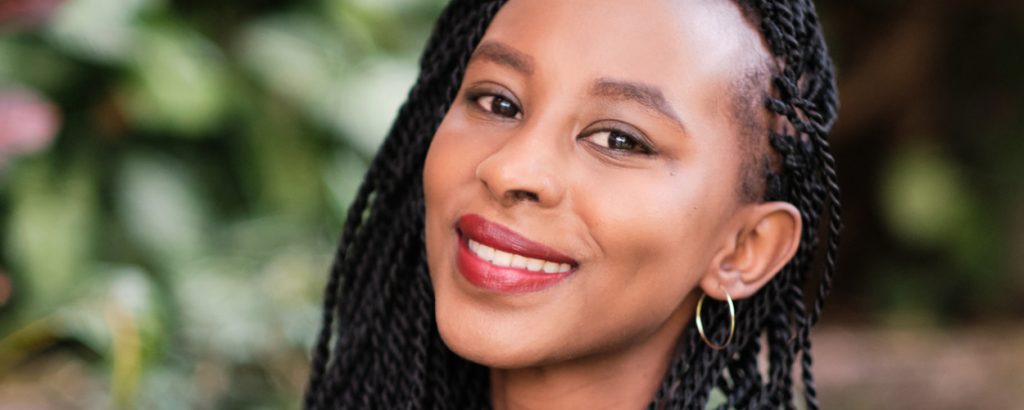
I was excited when I heard about ‘I Am Leah’, which is on at Camden People’s Theatre this week, because it’s the work of two amazing writers – Jo Ingabire Moys and Jessica Hagan – and it deals with a really important topic.
The play focuses on the experiences of Rwandans affected by the genocide that took place in their homeland in the nineties and explores the generational trauma that it has inflicted. It tells the story of Leah with elements of dark humour against the backdrop of a politically charged UK and a mother-daughter narrative.
I spoke to Jo Ingabire Moys – who directs as well as having co-written the script – to find out more.
CM: Can you start by telling us what ‘I Am Leah’ is all about? Who is Leah and what story does it tell?
JIM: Leah is a young, bright woman from London working in the tech industry. When she learns that she needs to go back to her birth country of Rwanda, her world falls apart.
‘I Am Leah’ is a story about the many identities children of immigrants embody and the difficulty of wearing them all. It’s also about the complex relationship between a refugee mother and daughter as they assimilate into British society.
CM: What themes does the play explore?
JIM: The play explores intergenerational trauma in the Rwandan community but also of the African diaspora at large.
CM: Does the play have a message? Would you regard it as political?
JIM: The play gives voice to Rwandans as they reflect on the genocide against the Tutsis. It also looks at the portrayal of Africans in the UK and the role they are expected to play.
Some might find that political but, at the core of it, the play is about a family dealing with a tragic past.
CM: What made you want to create a play about this? What was the inspiration for it?
JIM: The play is inspired by a book published by Huza Press called ‘100 Days, 100 Stories: Rwandan Voices On The 1994 Genocide Against the Tutsi’, which I edited.
It took about ten years to put together this collection of stories from multiple perspectives, ie, survivors, perpetrators, rescuers etc. The common theme throughout the process of collecting the stories, was how people grappled with their identity in the aftermath of 1994.
There’s a lot of preconceived ideas about how people who have lived through war should behave. The play looks at those stereotypes and how survivors present themselves and their difficult family past to make themselves more acceptable.
CM: You’ve worked on it with a co-writer – can you tell us a bit about Jessica Hagan and how you came to be working on this with her?
JIM: Jessica Hagan is a brilliant writer. Her first play was the award-winning ‘Queens Of Sheba’ and she followed that up with more beautiful work.
She writes women with humour and nuance and, like me, she understands the life of straddling two very different cultures. I was thrilled when she agreed to work with me because I knew that she could bring in a more universal perspective that complements the specificity of the Rwandan context.
My background is in film and TV as well, so it was essential that I write with an experienced playwright.
CM: Can you tell us what the creative process was like, how did you two work together to create this?
JIM: There was a lot of research involved in the creative process. We read a lot of published work and testimonies, met experts and survivors.
There was a heavy sense of responsibility to make sure the play was as authentic and true as it could be.
CM: Did you always plan to direct the show yourself? What made you want to take this approach?
JIM: I’ve always loved theatre and wanted to work in that space.
When developing the idea, I knew that the story had to be a play, as that medium allows for the immediacy and intimacy the subject matter deserves.
When it came down to choosing a director, I felt confident and excited about taking on the challenge.
CM: Can you tell us about your cast?
JIM: We have a fantastic, experienced cast. Nahel Tzegei – ‘The Jungle’ – plays Leah; Michelle Asante – ‘Our Lady Of Kibeho’ – plays Leah’s mother Odetter; Sara Motoken – ‘Taming Who’ – plays Amina, Leah’s best friend; and Alex Akindeji – ‘The Streets’ – plays Maurice, Leah’s uncle.
CM: And now, can you tell us a bit about yourself? How did you come to be working as a creative? Have you always wanted to do things like this?
JIM: I moved to the UK from Rwanda as a child.
Working as a creative seemed like a far-fetched idea but I was fortunate enough to work in the film industry right after I graduated from university. I started off as a runner and worked in various behind the scenes roles.
My first short film, ‘Bazigaga’, was nominated for a BAFTA last year, which has opened up new opportunities for me to work as a writer and director. I couldn’t have dreamed of a better job.
CM: What aims and hopes do you have for the future?
JIM: I hope I get to continue working on projects that are fulfilling and groundbreaking.
I hope ‘I Am Leah’ has a life outside this week’s limited run at the Camden People’s Theatre, because it’s a different, essential presentation of a migrant family.
They are a complex bunch but they are also warm and funny; the kind of people you might even like if you met them at the pub.
CM: What’s coming up next for you after this?
JIM: I’m developing my first feature with the BFI, which is thrilling.
‘I Am Leah’ is on at Camden People’s Theatre from 8-12 Oct, see the venue website here for more information and to book tickets.
LINKS: cptheatre.co.uk | x.com/cp_theatre