THIS WEEK IN CULTURE + THE CULTURE BUSINESS

Laura Grillo: What Would Jarvis Do?
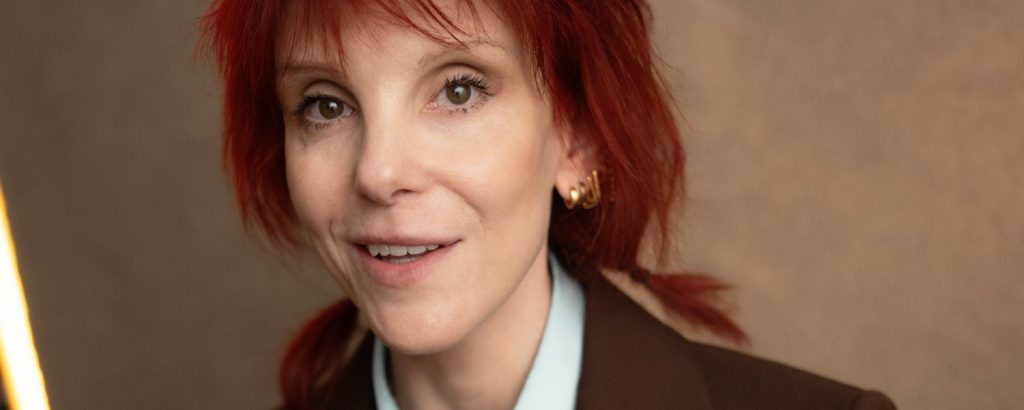
Heading to the Omnibus Theatre in early October is ‘What Would Jarvis Do?’, which returns to the stage following earlier, sold out development performances.
The play is by Laura Grillo, and is an absurdist and experimental black comedy that explores fandom, grief and the importance we attach to material objects.
I’m a big fan of Pulp, and always was, so I was immediately piqued by the promise of a show dwelling on its lead singer’s possible trousers. To find out more, I spoke to Laura ahead of the upcoming run.
CM: Can you start by telling us about the narrative of ‘What Would Jarvis Do?’ Who is it about and where does the story take us?
LG: ‘What Would Jarvis Do?’ is an absurdist story about friendship that touches upon grief and our relationship with the past.
It follows two long-term friends, Didi and GG, who are huge Pulp fans. They buy a pair of trousers from their therapist, Ms Lacy, who claims they once belonged to Jarvis Cocker.
Didi and GG quickly realise the trousers aren’t authentic, so they use the return address on the package to track Ms Lacy down. They turn up demanding either the real trousers or their money back.
That confrontation sends them on an increasingly strange and absurd journey. At the house they encounter Mister, who appears to be being kept captive by Ms Lacy, and Christopher, Ms Lacy’s mysterious “son”.
What begins as a mission to get their money back or get their hands on the real Jarvis’s trousers gradually becomes something much stranger.
The play moves between the recognisable and the surreal, and as their journey continues, you start to question what is real and what perhaps isn’t.
I don’t want to give too much away, because I think part of the fun is going on that journey with them.
CM: What themes are explored through the play?
LG: The play explores grief, nostalgia, friendship and our need to hold onto things from the past.
I’m really interested in the way we attach memories and emotions to objects, music and popular culture. In the play, the trousers become much more than just a pair of trousers supposedly owned by Jarvis Cocker. They become something the characters can invest with meaning.
There’s also a lot about friendship, particularly long-term friendship, and the shared language you build with someone over many years. Didi and GG have all these memories and cultural references between them, but they don’t necessarily experience the past in exactly the same way.
Grief runs underneath the play too, but I didn’t want to explore grief in a very straightforward or sombre way. I wanted it to sit alongside silliness and absurdity, because I think grief can be strange and funny as well as painful. I feel grief is absurd.
And then there’s nostalgia. I’m interested in why we keep returning to certain music, objects or periods of our lives, and whether nostalgia comforts us or sometimes prevents us from moving forward. I don’t think the play necessarily answers that question, but it plays around with it.
CM: How would you describe the play in terms of a style or genre?
LG: I would describe it as an absurdist black comedy. It starts in a world that feels fairly recognisable and then gradually becomes stranger, but the characters themselves take what is happening completely seriously.
The characters are heightened, almost cartoonish. I’m influenced by slapstick comedy and double acts such as Laurel And Hardy, and I love the idea of people behaving as though something completely ridiculous is perfectly normal.
There are darker elements in the play, particularly around grief and loss, but I never wanted it to become a conventional drama about grief. The humour and absurdity are really important to me, and I think having those things sitting alongside the darker elements makes the world of the play more interesting.
CM: Are you a fan of Jarvis?
LG: Yes! I would say I’m a fan of Jarvis and a fan of Pulp. Probably not in the traditional “fan” sense. But maybe I am…
I almost don’t want to answer this question because it feels quite deeply rooted in me and I find it difficult to articulate exactly why. I think Pulp represents a “safer” time in my life that I remember, so my attachment to them is tied up with memory as much as it is with the music.
There’s something incredibly sensory about it for me too. When I watch old footage of Pulp, I can almost see the colours of that period and smell the atmosphere.
It transports me somewhere. It isn’t necessarily one particular memory – it’s more like a feeling of a time and a place that I recognise. I find it fascinating that music and images can do that to us.
I also love the people who inhabit Pulp songs. The oddballs, outsiders and people who don’t quite fit. I love the cheekiness of the songs, but they can also be incredibly tender and often they feel almost like diary entries.
‘Something Changed’ is a perfect example. It takes something as ordinary as two people meeting by chance and wonders how completely different their lives might have been had they never met. I think that’s beautiful.
Then during lockdown, all of that took on a different significance for me. I had lost my mum and I was in another country, completely isolated. It was basically just me, my dog, my writing and endless YouTube clips of Pulp playing in the background.
That strange, confined existence was such a contrast to the world I associated with Pulp, a world that, in my memory at least, seemed colourful, exciting and full of possibility. Jarvis was also doing his Domestic Disco online at the time, so somehow he and Pulp became part of the landscape of that period for me too.
So yes, I’m a fan. Perhaps much more of a fan than I initially wanted to admit!
CM: What was the inspiration for this? What gave you the idea for this story?
LG: Right after my mum died, I tried opening an old document of a play I had been working on. It was a comedy horror, but suddenly I just wasn’t feeling it anymore.
I felt as though there had been a ‘before me’ and now something different was happening. I think something changes in you when someone significant in your life dies.
Lockdown was in full swing and I was listening to lots of things about grief and dealing with grief, alongside lots and lots of YouTube videos of 90s music, particularly British music. Then the video for ‘Common People’ came up and I remember thinking, “I remember this! I love this song. I love this video”.
At the same time, I was dealing with all the bureaucracy that comes with death and I was frightened. I looked permanently like someone caught in headlights. I couldn’t sleep. I kept putting old episodes of ‘Poirot’ on the television at night and, for some reason, David Suchet’s voice would soothe me to sleep.
But what really kept me going was music. When I listened to it, I was transported somewhere else and that place felt safe. I started thinking about Jarvis. He always seemed quite chilled to me. Would he be as anxious as I was? Probably not. What would he do? What would Jarvis do?
And then I thought: that’s a very good title for a play.
Around the same time, I realised that the way I was coping with everything was through a series of steps. I would think, “If I can just get A done, I’ll feel better”. I’d do A and I didn’t feel better. So perhaps B would do it. Maybe slightly, but not really. So, onto C.
That gave me the idea for these two characters who are searching for something they believe will make them feel better. But what happens when they actually get it? Does it make them feel better? And should they even find the thing they’re searching for in the first place?
That was really how ‘What Would Jarvis Do?’ began. So I suppose it came from a combination of grief, Jarvis Cocker and, rather unexpectedly, David Suchet.
CM: As playwright, have you been involved in the ongoing production?
LG: Yes, very much so. I’ve been involved throughout the development of the production and I’m currently attending rehearsals, although I’m also very conscious that there comes a point when you have to give the director and actors space to discover the play for themselves.
It’s fascinating hearing words that you’ve spent so long looking at on a page suddenly being spoken and physically explored by actors. Sometimes something you thought was very clear when you wrote it turns out not to be, and other times an actor finds something in a line that you hadn’t consciously realised was there.
I’m working closely with our director, Maiya Pascouche, and the rest of the team, and I’m there to answer questions about the text.
At the same time, I’m trying not to interfere with every discovery in the room. I think there has to be a point where the play stops belonging entirely to you and becomes something everyone is making together.
CM: Can you tell us about the cast and creative team?
LG: We have a brilliant cast. Annabel Smith plays Didi, and Isabel Butt plays GG, the two friends at the centre of the story. Henry Miller plays Mister, Erika Poole is Ms Lacy, and Gigi Zahir plays Christopher.
These are quite heightened, sometimes almost cartoonish characters, so it’s been really exciting watching the actors find the humanity within all the absurdity.
The production is directed by Maiya Pascouche, with Ella Dale producing. Georgie Lynch-Bailey is our set and costume designer, Laurel Marks is our lighting designer, and FREW is our sound designer.
Sound is particularly important to this play because music is so embedded in its world, and it’s been fascinating thinking about how we can create our own sonic language around that.
It’s a very collaborative team, and one of the things I’m enjoying most about rehearsals is seeing everybody bring their own ideas to something that, for such a long time, existed only in my head and on my laptop.
CM: And now you: what drew you to working in this area? Was it what you always wanted to do?
LG: I always wanted to write. Originally, I wanted to write and be in my own comedy films. Then I realised I was rubbish at acting, so that part of the plan quietly disappeared!
I went to Dartington College Of Arts and studied Performance Writing, which was experimental. We explored all sorts of different forms of writing, sometimes quite literally rolling around in paint.
I became particularly interested in experimental film, film loops, repetition and texture. I think a lot of that has stayed with me and probably still influences the way I approach writing now.
Then I needed a job and, importantly, money, so I trained as a Montessori teacher. I did that for many years, but I really missed writing. Eventually I decided I was going to finish a play and that was the beginning of finding my way back to it properly.
Since then, I’ve written a handful of plays, but ‘What Would Jarvis Do?’ is the first full-length play of mine to receive a full production.
That feels quite bittersweet because, underneath all the absurdity and comedy, the play exists because I lost my mum. Something that began during one of the most difficult periods of my life has ultimately brought me back to something I always wanted to do.
CM: What have been your highlights of working in the creative industries thus far?
LG: The collaboration has probably been the biggest highlight for me. I sometimes think making a play is a bit like being in a band. Everyone is bringing something different and everyone is needed to make the thing work.
I love that something can begin with me sitting alone writing and then suddenly there are actors, a director, a designer, sound, lighting and a producer, all bringing things to it that I could never have created by myself.
Seeing my work actually performed has also been a huge moment for me. It was always a dream of mine to have something I’d written put on stage, so achieving that feels incredibly special.
Receiving Arts Council England funding to develop ‘What Would Jarvis Do?’ into a full production was another huge moment. It gave me the opportunity to take the play much further and work with a full creative team.
And I think what excites me most now is the prospect of future collaborations. I want to keep meeting people and making things together, because I’m discovering that this is one of the parts of the whole process that I love most.
CM: What aims and ambitions do you have for the future?
LG: I want to keep writing and, hopefully, keep having the opportunity to see that work produced. I’d love to continue writing for theatre, but I also really want to write a screenplay and explore what I can do with film.
I’m also really interested in experimenting with form. I don’t necessarily want everything I make to fit neatly into the category of “a play” or “a film”. I’d like to collaborate with people from different disciplines, music, fashion, film and art. And see what happens when those worlds collide.
Ultimately, I think my ambition is to build a body of work that has its own recognisable world. I want to keep working with interesting people.
CM: What’s coming up next for you after this?
LG: I have another completed play called ‘Get Out of My Fridge, Paul Reubens’, which I’d really like to develop towards a production and get in front of an audience. It’s another slightly strange comedy.
I’m also currently writing a new play called ‘A Goat Of A Certain Age’, which is about two sisters who begin turning into goats and explores our relationship with the cosmetic industry and ageing. I’m still writing that one, so even I’m not entirely sure where it’s going yet.
I’m also interested in exploring ‘What Would Jarvis Do?’ as a screenplay. I think it would be fascinating to see what happens to this strange little world when it moves from the stage to the screen, and what film might allow me to do with it that I can’t do in a theatre.
After spending so much time concentrating on this production, I’m looking forward to having the space to go back into that slightly messy stage where you’re experimenting, following ideas and seeing what turns into the next thing.
‘What Would Jarvis Do?’ is on at the Omnibus Theatre from 6-16 Oct. See the venue website here for information and to book tickets.